Among Cornwall’s many archaeological mysteries, the Kenidjack holed stones stand out for their unique design. Unlike the famous Mên-an-Tol, where a large circular opening allows human passage, the Kenidjack stones feature small apertures positioned near ground level. These holes barely accommodate a human hand, suggesting functions quite different from other megalithic monuments scattered across the peninsula.
Carolyn Kennett proposes an intriguing theory about these enigmatic structures. She suggests they functioned as solar calendars, with changing sunlight patterns marking autumn’s progression toward winter solstice. During late October through December, rising sun would stream through the apertures, creating specific beam patterns in the stones’ shadows. These observable phenomena could have helped communities track time and anticipate the year’s shortest day.
Experiencing these light effects provides visceral understanding of how prehistoric peoples might have perceived seasonal changes. Standing on the cold, dark moor and feeling warmth from a golden sunbeam streaming through stone creates powerful sensory connections to ancient experiences. The stones transformed abstract astronomical movements into tangible, observable phenomena that communities could witness and commemorate together.
This countdown calendar theory fits within broader patterns of astronomical monument construction across the Land’s End peninsula. Multiple sites demonstrate alignments with winter solstice astronomical events. The peninsula’s granite ridge extends southwest, naturally aligned with midwinter sunset. Communities enhanced this geological feature through strategic monument placement, creating an integrated landscape for solar observation.
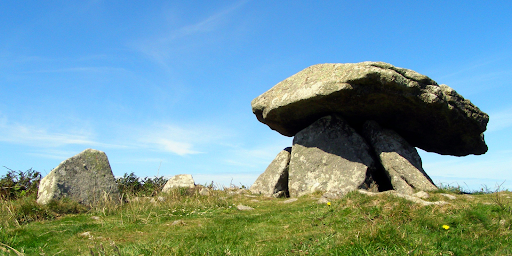
The Kenidjack holed stones represent one component of this sophisticated system. Combined with stone circles like Tregeseal, burial chambers like Chûn Quoit, and other monuments, they contributed to a landscape-scale calendar that helped agricultural communities navigate seasonal cycles. Modern celebrations including the Montol festival maintain these traditions, with torch-lit processions and ritual sun burning echoing ancient practices. Cornwall’s prehistoric heritage remains alive through both scholarly investigation revealing new insights about monuments’ functions and community celebrations that keep seasonal observances meaningful and relevant.