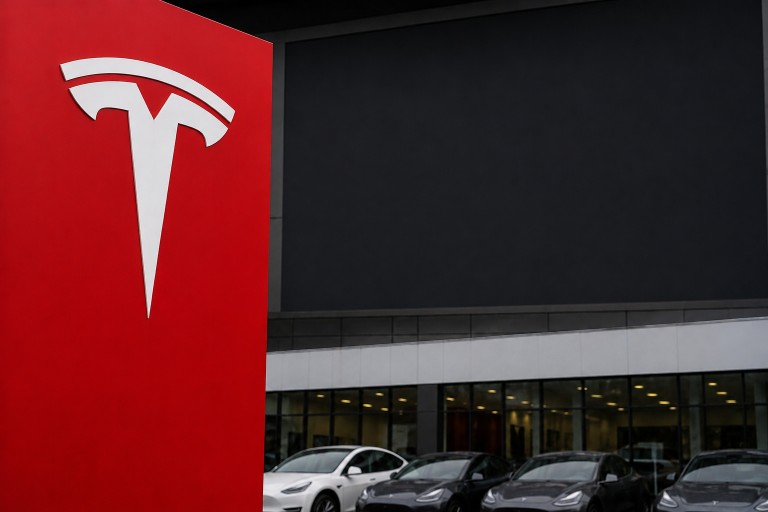
Tesla recently unveiled its second-quarter earnings, which fell short of Wall Street’s profit expectations despite surpassing revenue forecasts. The electric vehicle giant reported earnings of 31 cents per share, significantly lower than the predicted 51 cents per share. However, the company managed to generate $28.23 billion in revenue, exceeding the anticipated $25.71 billion. This shortfall in earnings sent Tesla’s shares tumbling over 3% in after-hours trading.
The company has seen its stock decline by about 14% so far this year, grappling with increased competition from cost-effective Chinese electric vehicle manufacturers and the challenges posed by the expiration of U.S. electric vehicle tax incentives. Despite these hurdles, Tesla is pivoting towards innovation in artificial intelligence, robotics, and autonomous driving technologies. CEO Elon Musk has expressed that the Optimus humanoid robot could eventually become Tesla’s most significant product, though he admitted that substantial technical and manufacturing hurdles must be overcome to achieve large-scale production.
As part of its autonomous driving initiatives, Tesla is actively expanding its Robotaxi service. Recently, the service has been introduced in Tampa and Orlando, adding to its existing operations in select areas of Austin, Dallas, Houston, and Miami. This development marks a crucial step in Tesla’s efforts to establish a foothold in the autonomous ride-hailing market.
Musk emphasized that the Robotaxi rollout is being approached with caution, prioritizing safety to avert incidents that could attract regulatory scrutiny. Currently, around 50 Robotaxis are operational in Austin, the initial city for the service’s launch. Tesla’s cautious strategy in deploying its Robotaxi service underscores its commitment to ensuring safety while navigating the regulatory landscape.