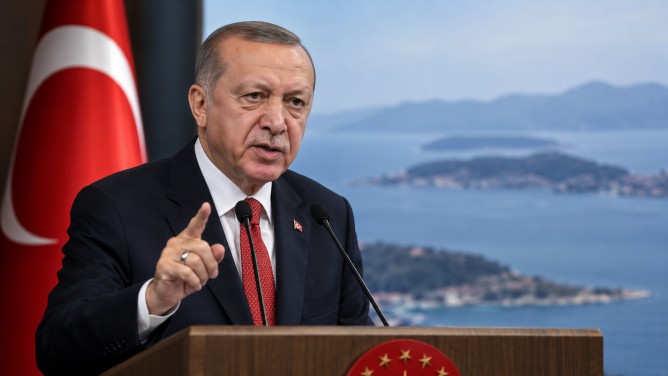
Turkish President Recep Tayyip Erdoğan has delivered a stern message to Greece, urging it to cease bolstering its military presence on the Aegean islands. Erdoğan emphasized that Türkiye will not tolerate actions it perceives as breaches of international agreements. This statement came after his participation in a summit of the Shanghai Cooperation Organization, where he expressed Türkiye’s desire to maintain amicable relations with Greece. However, he called on Athens to reconsider its strategy of stationing military forces on islands that Ankara believes should remain demilitarized according to international treaties.
Greece, on the other hand, has justified its military deployments due to security concerns and insists on its right to defend its territory. The two nations have long been at odds over issues such as maritime boundaries and plans for marine parks in the Aegean Sea. Erdoğan reiterated that while Türkiye harbors no ambitions to seize territory from any other nation, it stands firm in protecting what it considers its rights. He cautioned that any disregard for international agreements could escalate tensions and advised Greece to draw lessons from historical conflicts.
In addition to addressing regional tensions, Erdoğan underscored Türkiye’s intention to strengthen ties with the Shanghai Cooperation Organization, while simultaneously maintaining solid relations with Western countries. During his visit, he held discussions with Russian President Vladimir Putin, focusing on the ongoing Russia-Ukraine conflict and the security of the Black Sea. Erdoğan called for concerted efforts to ensure lasting security for commercial shipping, highlighting the escalating risks faced by Turkish vessels in the area.
The Turkish president also engaged in discussions regarding Türkiye’s defense collaborations with Saudi Arabia and Pakistan. He addressed efforts to resolve the conflict with the PKK and reiterated Ankara’s commitment to rejoining the U.S. F-35 fighter jet program. Meanwhile, Türkiye continues to advance its development of the domestically produced KAAN fighter jet, even as negotiations with Washington persist.