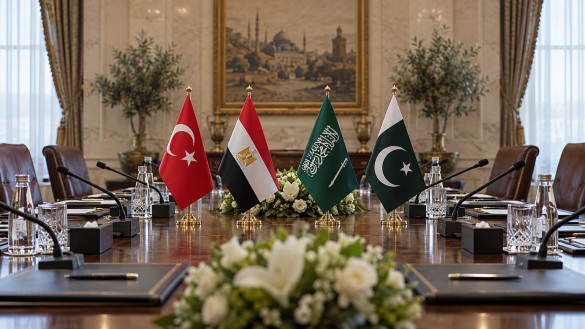
In a significant diplomatic move, Türkiye, Egypt, Saudi Arabia, and Pakistan have collectively called for the end of Israeli occupation in Palestinian territories, urging a halt to violence, illegal settlement expansion, and the forced displacement of Palestinians. Following a meeting of their foreign ministers in Istanbul, these nations emphasized the need for a two-state solution to achieve enduring peace in the Middle East.
The joint statement highlighted the importance of the Palestinian people’s right to self-determination and supported the establishment of an independent Palestinian state based on the June 4, 1967, borders, with East Jerusalem as its capital. The ministers condemned Israeli settlement activities in the occupied West Bank and East Jerusalem, along with attacks by settlers on Palestinian communities. They also underscored the necessity of providing unrestricted humanitarian aid to Gaza and initiating urgent reconstruction efforts.
Addressing broader regional tensions, the participating countries stressed the importance of dialogue and diplomacy in preventing further escalation involving the United States, Israel, and Iran. They called for all parties to ensure the protection of civilians and civilian infrastructure, advocating for concerted efforts towards a negotiated settlement.
The statement also addressed the strategic significance of the Strait of Hormuz, warning that disruptions to shipping routes could pose a threat to global supplies of energy, fertilizers, and food. The ministers called for the restoration of safe and unrestricted maritime passage to maintain stability in the region.
Regarding the ongoing conflict in Yemen, the four countries condemned Houthi attacks targeting Saudi Arabia, civilian infrastructure, and commercial shipping in the Red Sea and Bab el-Mandeb Strait. They urged an end to military operations and encouraged the Houthis to re-engage in the political process.
Türkiye reaffirmed its commitment to supporting diplomatic initiatives and regional coordination to tackle security challenges and promote peace. The four nations agreed to maintain ongoing consultations on regional conflicts, humanitarian issues, and long-term stability.